
Stepping Stones Curriculum
Stepping Stones Curriculum
TABLE OF CONTENTS
loading...
Ages 18 Months - 3 Years Old
The Stepping Stones program offers a Montessori, multi-age environment where toddlers explore, discover, and develop independence at their own pace. Our curriculum emphasizes social-emotional growth, sensory exploration, practical skills, and the foundations of language, math and science, preparing children for a lifelong love of learning.
Montessori education nurtures the whole child - cognitive, social, emotional, and physical. Children learn through hands-on experiences with carefully prepared materials, choosing activities that interest them, repeating exercises until mastery, and developing autonomy, concentration, and problem-solving skills. The classroom is inviting, organized, and child-sized, allowing children to move freely, make choices, and care for themselves and their community.
Days in Stepping Stones
Children arrive independently, hang up coats, and "sign-in" independently choosing their first work each day. Morning are structured around two independent work cycles, where children explore:
- Sensorial activities
- Practical life exercises
- Dramatic play and creative arts
- Early math, language, and science
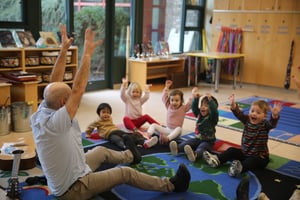
Short group times and specialty classes (Spanish, Music, Movement) punctuate the day, while outdoor play and snack provide opportunities for socialization, independence, and choice.
Curriculum Areas
Practical Life Skills
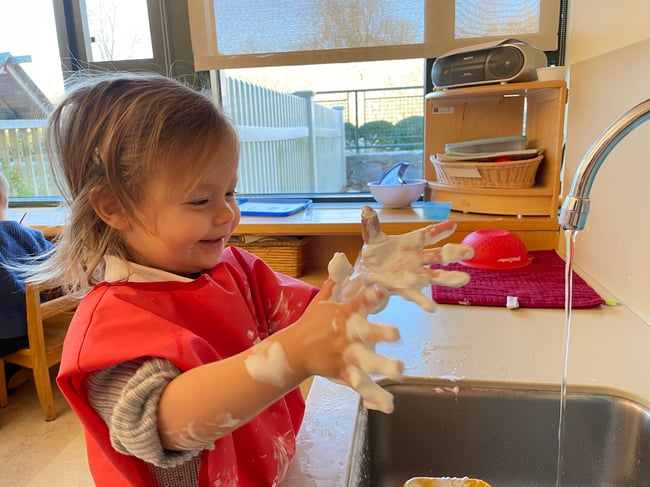
Practical life activities are meaningful, real-world exercises that help children develop independence, coordination, and focus:
- Fine & Gross Motor: Pouring, slicing, scooping, running, climbing
- Self-Care: Dressing, toileting, hanging coats, serving snacks
- Environment Care: Cleaning, tidying, food preparation
- Social Graces: Greeting, manners, turn-taking
These activities link home to school, reinforce repetition and mastery, and build concentration, a sense of order, and community awareness.
Sensorial Development
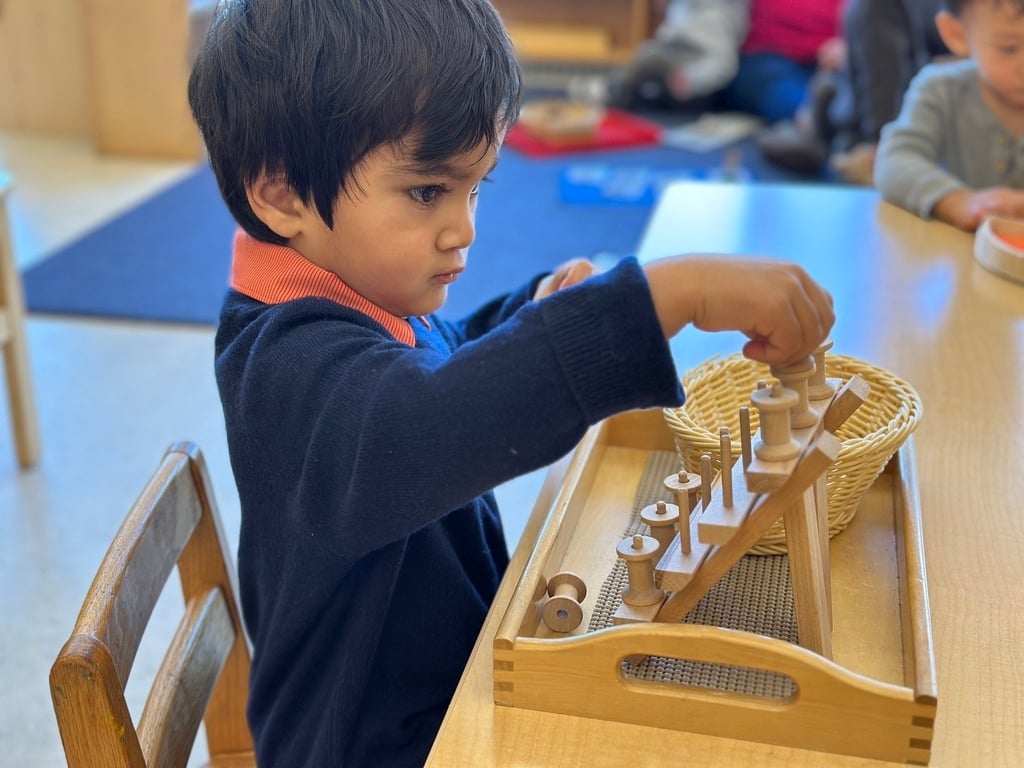
Children explore the world through their senses, building a foundation for later academic and social success:
- Tactile: Sand, rice, playdough, fabrics
- Auditory: Music, sound matching, environmental sounds & listening games
- Visual: Colors, shapes, light, and shadow activities
- Olfactory & Gustatory: Smelling and tasting exercises
- Vestibular & Proprioceptive: Movement, balance, climbing
Sensorial activities encourage observation, classification, problem-solving, and sensory integration, helping children process and make sense of their environment.
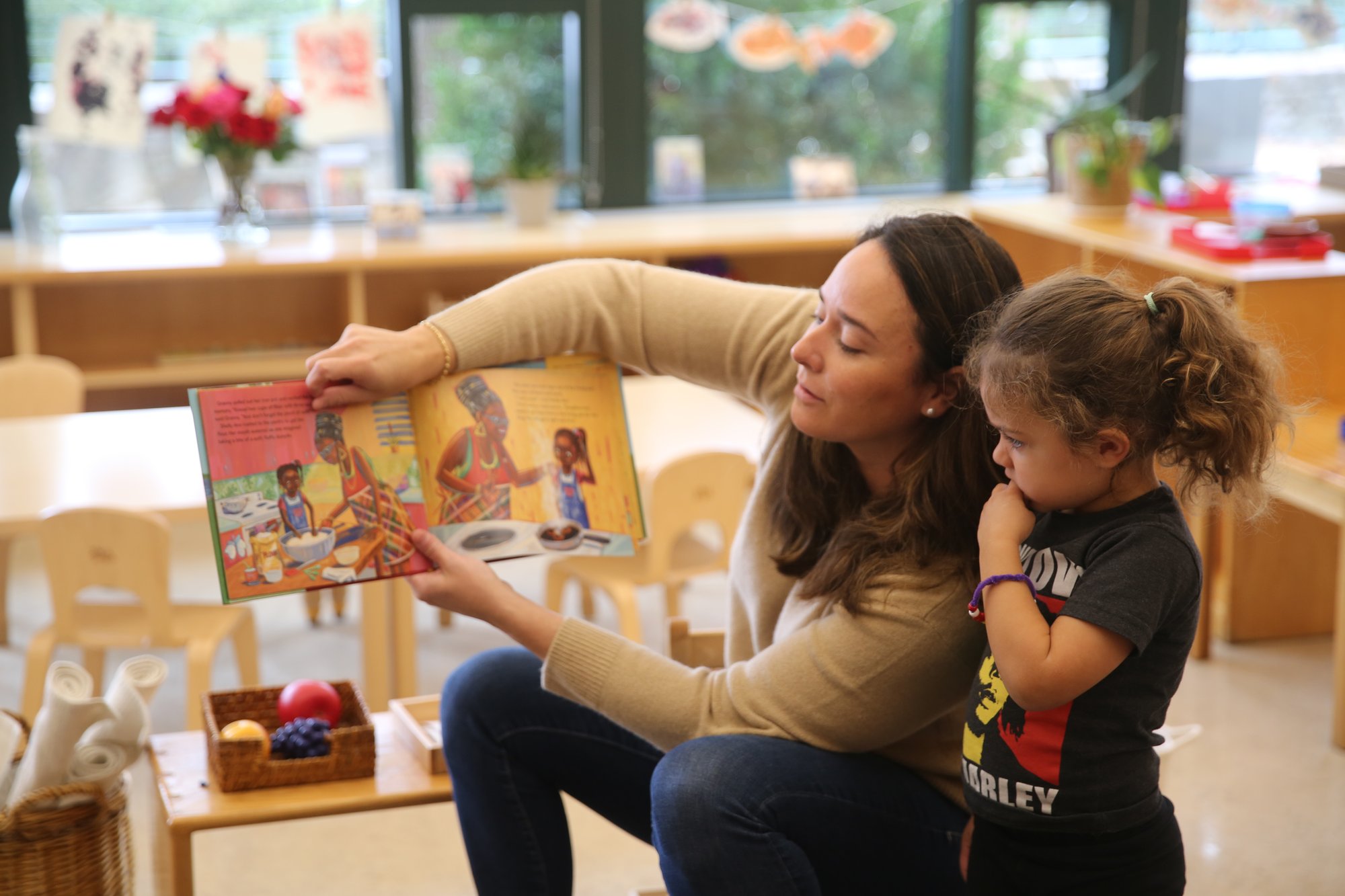
Language & Literacy
Language is a cornerstone of development in Stepping Stones:
- Listening: Stories, nursery rhymes, songs, fingerplays, following directions
- Speaking: Expressing thoughts, asking questions, taking turns
- Emergent Reading: Exploring books independently, story-based play, and building vocabulary
- Writing Readiness: Drawing, scribbling, and fine motor activities that strengthen the hand and prepare for writing
Children develop communication, listening, and a love of reading while engaging in rich social and imaginative interactions.
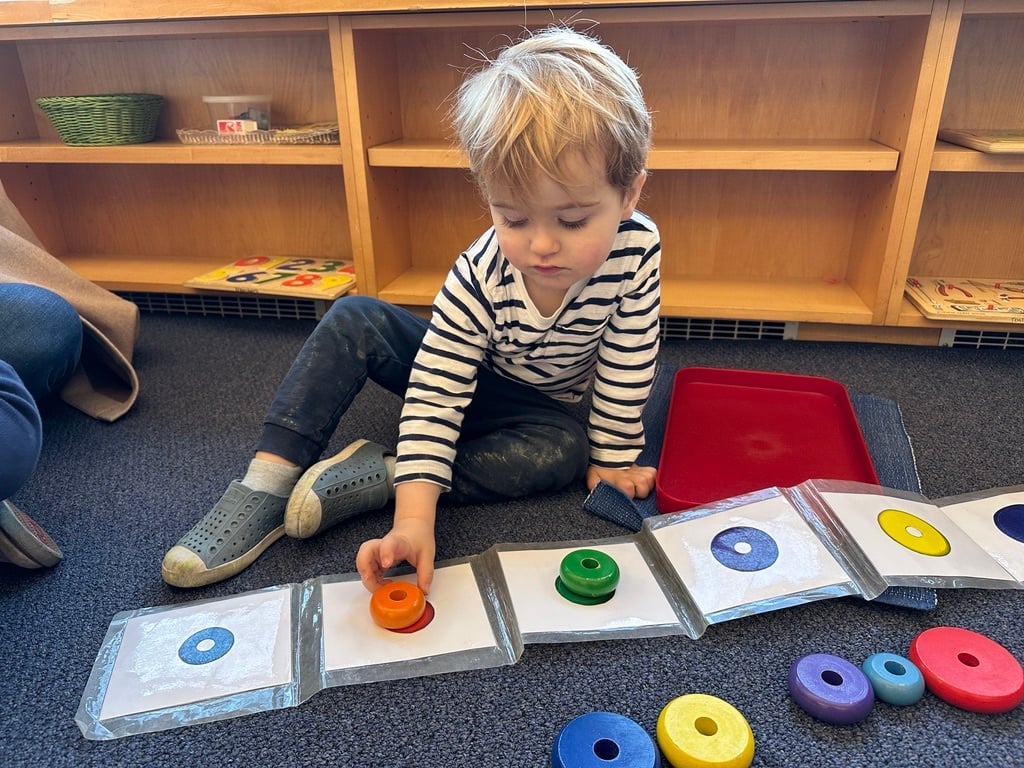
Mathematics
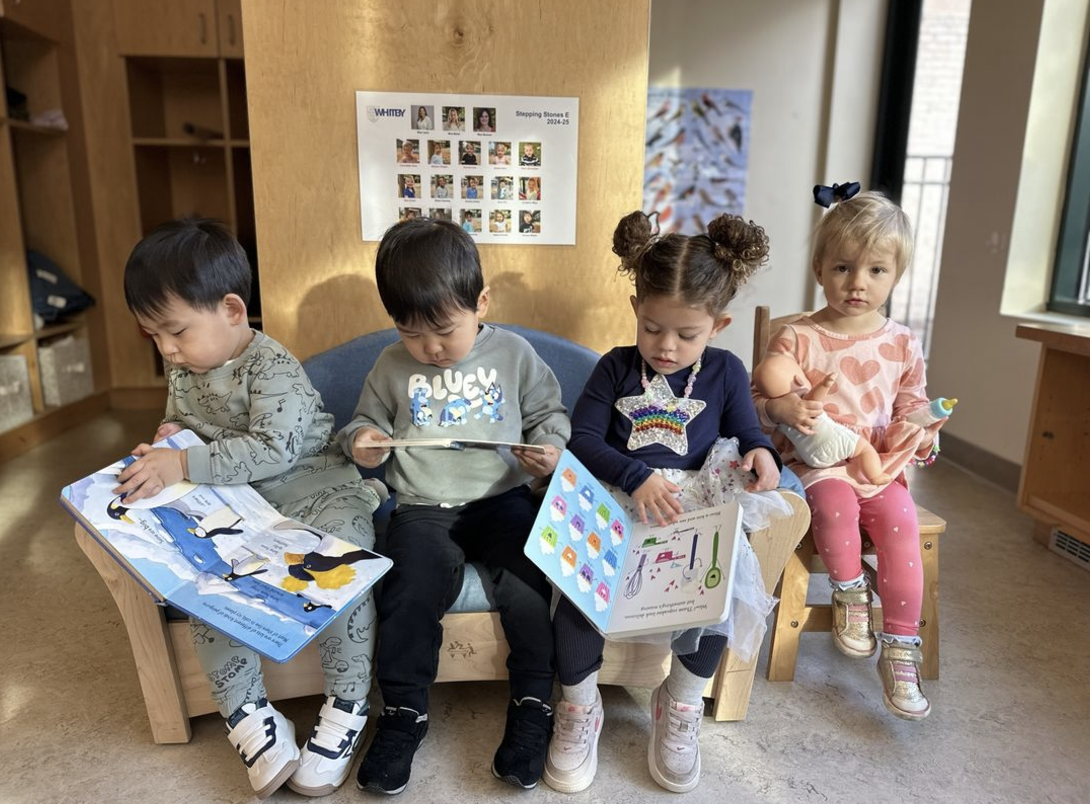
Mathematics is introduced through exploration and concentration experiences:
- Number Concepts: Counting, one-to-one correspondence, sorting, matching
- Patterns & Sequencing: Recognizing and creating repetitive patterns and following the proper order of steps within an activity.
- Shape & Space: Manipulating 2D and 3D forms, understanding position and direction
- Measurement: Comparing size, volume, and weight through hands-on activities
- Early Problem-Solving: Using objects, music, and daily experiences to understand quantity and relationships
Children build a strong foundation for logical thinking, spatial awareness, and numeracy.
Science & Exploration
Children are introduced to inquiry-based science, exploring the natural and physical world:
- Physical Science: Water play, magnets, motion, gravity, and simple experiments
- Life Science: Observing plants and animals, life cycles, and caring for living things
- Earth Science: Weather patterns, seasons, and environmental observation
Hands-on experiences encourage curiosity, experimentation, and critical thinking, while building scientific vocabulary.
Social Studies & Cultural Awareness
Children develop understanding and respect for themselves and others:
- Family & Community: Exploring relationships and roles in families
- Global Awareness: Celebrating diverse cultures, holidays, music, and foods
- Geography: Maps, globes, and tactile materials help children learn about land, water, and countries
Through stories, art, music, and cultural activities, children develop empathy, awareness, and appreciation for diversity.
Spanish
Children are introduced to Spanish using songs, movement, and multisensory materials:
- Basic vocabulary: colors, numbers, parts of the body, animals, clothing
- Daily greetings, simple instructions, and interactive routines
- Reinforcing language through play, music, and cultural exposure
Spanish helps children develop early multilingual skills, auditory discrimination, and cultural awareness.
Music, Art & Movement
Children express themselves creatively and physically through:
- Music: Singing, rhythm instruments, listening, and dancing
- Art: Open-ended projects to explore materials, colors, and textures
- Movement: Gross and fine motor coordination, rhythm, interpretive movement, and imaginative play
These activities develop motor skills, creativity, self-expression, and appreciation for the arts.
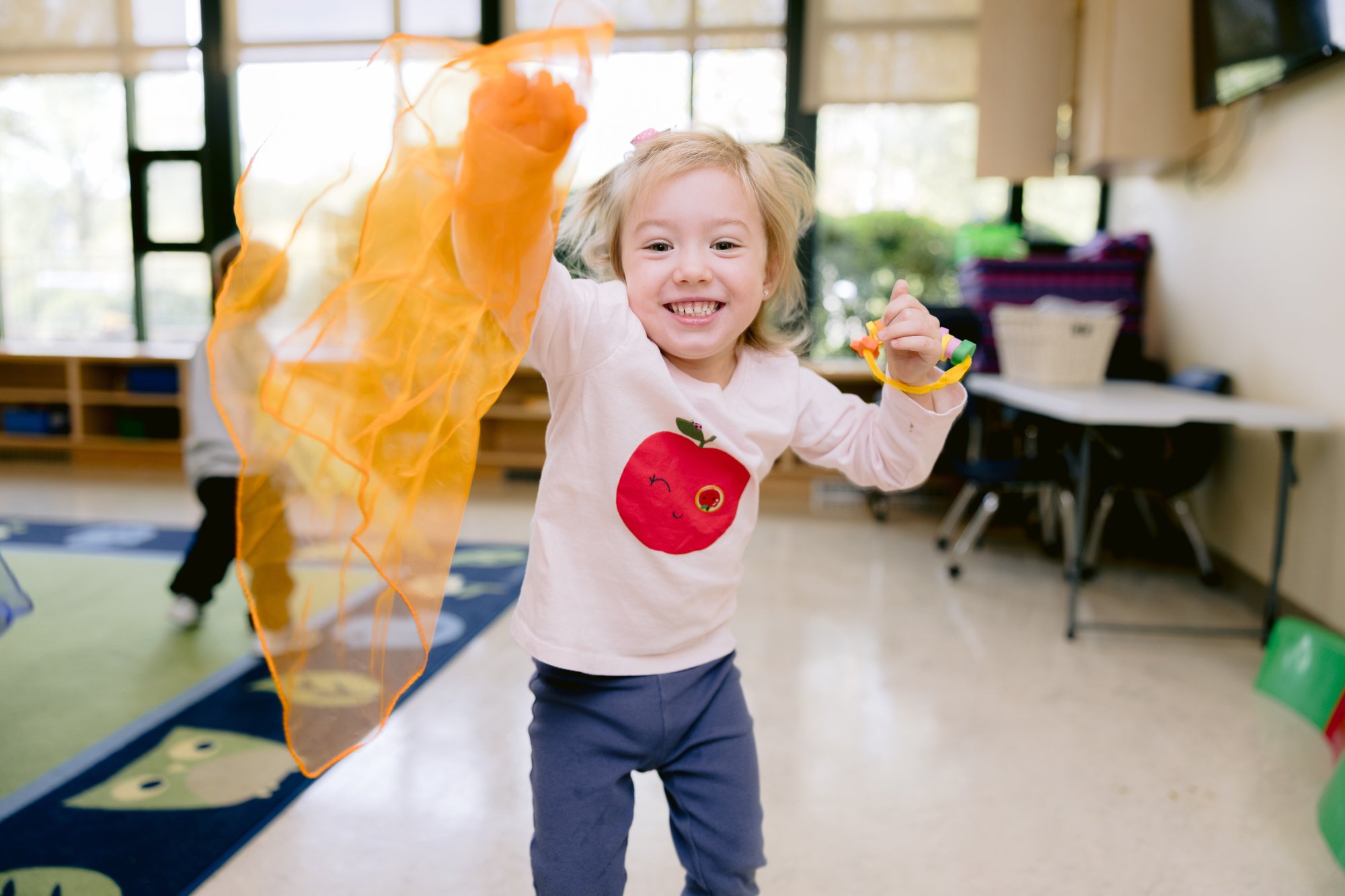
Social-Emotional Development
Stepping Stones emphasizes emotional growth, independence, and cooperation:
- Transitioning confidently from home to school
- Building peer relationships: taking turns, sharing, and resolving conflicts
- Expressing feelings appropriately and respecting others
- Building confidence, resilience, and social competence
Children Develop the emotional and interpersonal skills that support all areas of learning.
Why Choose Stepping Stones at Whitby?
- Nurturing Montessori environment tailored to toddlers
- Multi-age classrooms that encourage peer learning and mentorship
- Hands-on, sensory-rich materials that build independence
- Strong foundations in language, math, science, and social-emotional skills
- A joyful environment that fosters curiosity, confidence, and lifelong learning